
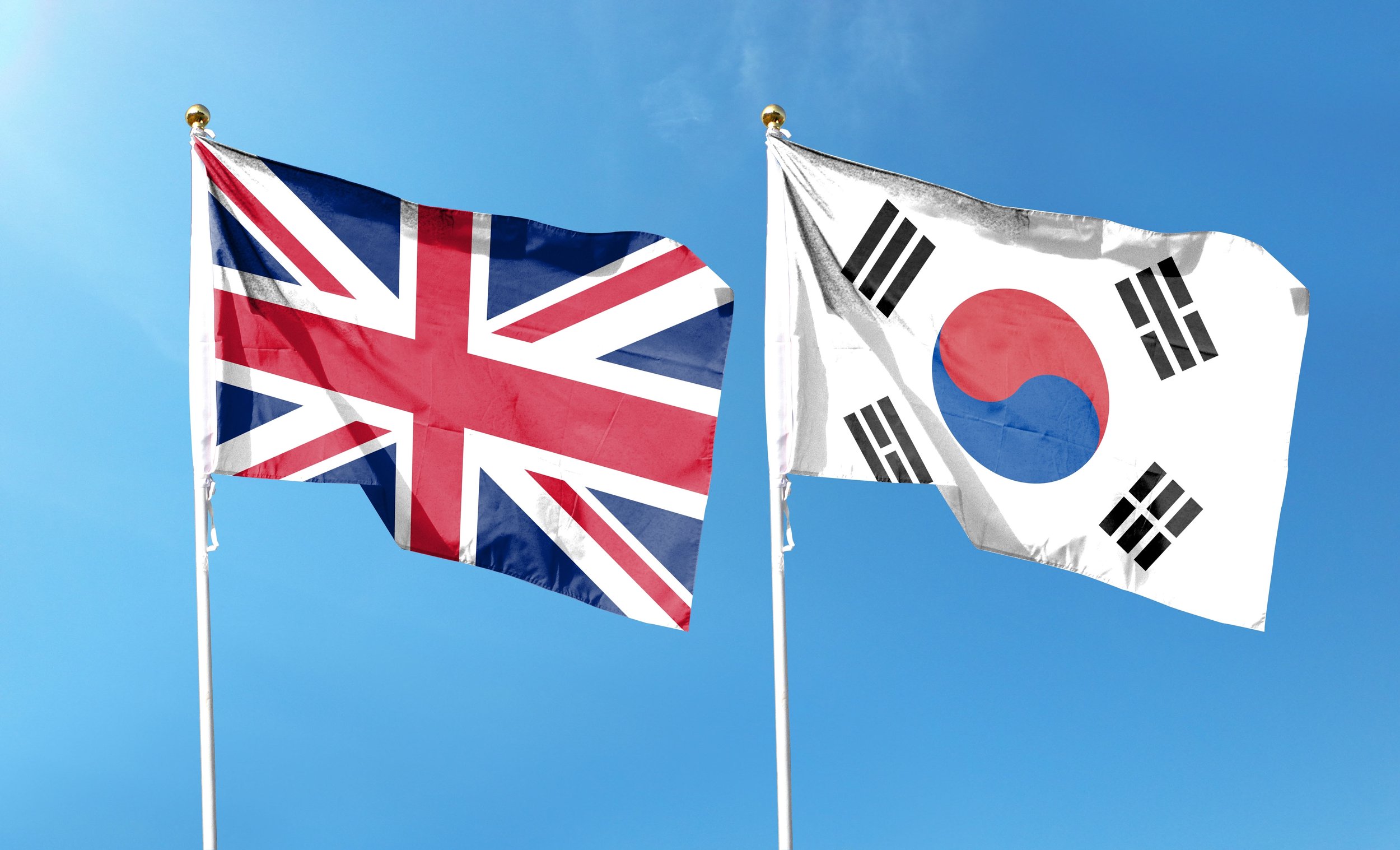
The United Kingdom and South Korea have concluded negotiations on an upgraded free trade agreement, aimed at boosting exports of British goods including Bentley cars, Scottish salmon and Guinness brewed in the UK. The agreement sets out provisions covering digital trade, financial and telecommunications services, streamlined customs procedures, the movement of business personnel, food safety standards, and investment protection.
The revised deal is a modification of the existing UK–South Korea agreement rolled over after Brexit and includes commitments to reduce tariffs and regulatory barriers, making it easier for UK businesses, particularly smaller exporters, to access the South Korean market.
It is the latest in a series of trade deals of varying natures signed by the UK this year, following agreements with the US and India. However, the Office for Budget Responsibility has said such deals are unlikely to have a measurable impact on UK economic growth by 2030.
UK-South Korea trade has experienced volatility in recent years, affected by global impacts such as the aftermath of the pandemic and supply chain disruption. But in any case, South Korea is the UK’s 25th largest trading partner, accounting for 0.8% of total UK trade in the year to June.
While ministers say the agreements will support jobs and cut red tape, much larger gains could come from reducing trade barriers with the European Union, which accounts for around half of UK trade. Independent analysis suggests closer alignment with EU standards could raise UK GDP by up to 1.5% in the long run, although this kind of agreement is not on the agenda during the current round of UK-EU negotiations.
David Henig, UK Trade and Business Commission Expert Adviser and Director of the UK Trade Policy Project at ECIPE (European Centre for International Political Economy) said:
“The upgrading of the UK-Korea trade agreement is welcome particularly for the automotive sector though the overall economic impact will be limited. Ideally this should be part of ongoing activity to strengthen existing trade agreements - with the EU as our largest trade partner the most important element of this."
